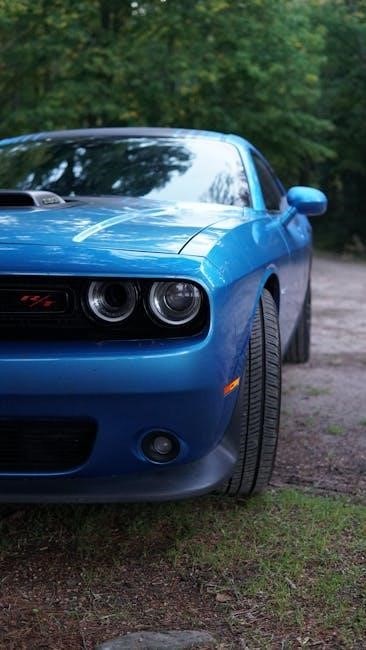
what size diff is in the challenger scat pack manual
What Size Diff is in the Challenger Scat Pack Manual: A Comprehensive Guide
Determining the correct differential ratio for a Challenger Scat Pack manual involves considering various factors, including model year and desired performance characteristics.
Several ratios, like 3.93, 4.10, and 3.9, are popular upgrades, impacting acceleration, MPG, and track performance.
The differential is a crucial component in any rear-wheel-drive vehicle like the Dodge Challenger Scat Pack, especially those equipped with a manual transmission. It allows the rear wheels to rotate at different speeds during turns, preventing binding and ensuring smooth handling. For Scat Pack models, understanding the differential’s gear ratio is paramount to optimizing performance.
The factory gear ratios vary, influencing acceleration, top speed, and fuel efficiency. Owners frequently explore upgrades to tailor the driving experience. Common choices include 3.93, 4.10, and even 3.9 ratios, each offering a unique balance. The 2020 models, utilizing the TorqueFlite ZF 8HP70 transmission, demonstrate complex gear interactions. Discussions on platforms like Reddit and Dodge Challenger forums highlight the impact of these changes, with users sharing experiences and MPG figures. Choosing the right differential is key to unlocking the Scat Pack’s full potential.
Understanding Differential Ratios and Their Impact
Differential ratios represent the number of times the driveshaft rotates for each revolution of the wheels. A numerically higher ratio (e.g., 4.10) means quicker acceleration but lower top speed and reduced fuel economy. Conversely, a lower ratio (e.g., 3.9) prioritizes highway cruising with better MPG, sacrificing some initial punch.
For a Challenger Scat Pack manual, this translates to tangible driving differences. A 4.10 ratio, popular for drag racing, provides strong off-the-line acceleration. A 3.93 ratio offers a balanced approach, while 3.9 is favored for city driving. The 2020 models’ 8-speed transmission complicates this, as the 1st and 2nd gear ratios are already relatively low. Careful consideration is needed to avoid excessively high RPMs at highway speeds when changing ratios;
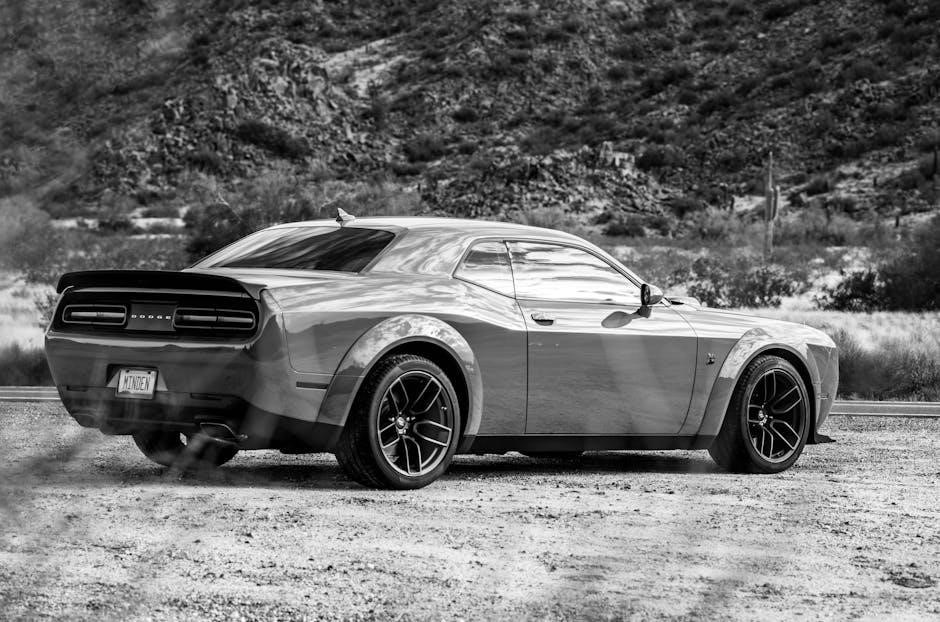
Stock Differential Specifications
Factory Challenger Scat Pack manuals typically feature a 3.93 rear differential ratio, offering a blend of performance and drivability for various driving conditions.
2020 Dodge Challenger Scat Pack Manual: Gear Ratios
The 2020 Dodge Challenger Scat Pack manual transmission models generally came equipped with a 3.93 rear axle ratio as standard. However, it’s crucial to verify the specific ratio for each vehicle, as variations could exist based on optional packages or dealer configurations. This ratio significantly influences the vehicle’s acceleration and overall driving experience.
Specifically, the gear ratios for the 2020 Scat Pack manual are as follows: 1st ⸺ 4.71, 2nd ‒ 3.14, 3rd ⸺ 2.10, 4th ‒ 1.67, 5th ‒ 1.29, 6th ‒ 1.00, 7th ⸺ 0.84, 8th ⸺ 0.67, and Reverse ‒ 3.30. These ratios, combined with the 3.93 differential, provide a balance between quick off-the-line acceleration and comfortable highway cruising. Understanding these ratios is key when considering potential differential upgrades.
Common Stock Differential Ratio for Scat Pack Manuals
Across various model years, the 3.93 rear axle ratio has emerged as the most frequently found stock differential for Challenger Scat Pack models equipped with a manual transmission. While not universally standard across all years, it represents the predominant factory setup, offering a versatile balance for both street driving and performance applications.
Owners frequently discuss this ratio in online forums, noting its suitability for daily driving and reasonable highway fuel economy. However, it’s important to remember that variations exist. Some Scat Packs may have left the factory with different ratios depending on specific options chosen. Confirming the original ratio via the vehicle’s build sheet or by physically inspecting the differential is always recommended before making any modifications.
Variations in Differential Ratios by Year (2015-2024)
Differential ratios in the Challenger Scat Pack manual varied between 2015 and 2024, though consistent patterns emerge. Early models (2015-2018) predominantly featured the 3.93 ratio, establishing a baseline for performance. Later years saw increased flexibility, with some builds offering alternative ratios as optional equipment.
While 3.93 remained common, the 4.10 ratio gained traction as a performance-oriented choice, particularly with the Hellcrate engine swaps. Discussions on forums indicate a shift towards driver preference influencing the factory setup. Checking specific vehicle documentation is crucial, as relying on model year alone isn’t definitive. The 3.9 ratio also appears, favored for city driving due to its balance of power and fuel efficiency.

Analyzing Gear Ratios
Examining gear ratios reveals how they influence the Scat Pack’s performance; lower ratios (like 4.10) boost acceleration, while higher ratios (3.93) prioritize highway efficiency.
First and Second Gear Ratios: Detailed Breakdown
The first and second gear ratios in the Challenger Scat Pack manual transmission are crucial for initial acceleration and launching from a standstill. Data indicates a 4.71 ratio for first gear and 3.14 for second. These relatively high ratios provide significant torque multiplication, enabling quick off-the-line responsiveness.
However, when considering differential changes, these lower gears become even more impactful. A lower overall ratio (achieved with a numerically higher differential gear) will further amplify this effect, potentially leading to wheelspin if not managed correctly. Conversely, a higher overall ratio will reduce torque multiplication, resulting in a slightly slower initial acceleration but potentially improved stability. The 8-speed TorqueFlite transmission’s low first and second gears already contribute to strong launches, so careful consideration is needed when modifying the differential.
Third, Fourth, Fifth, and Sixth Gear Ratios: Performance Implications
Moving beyond the initial launch, the third through sixth gear ratios – 2.10, 1.67, 1.29, and 1.00 respectively – significantly influence cruising speed and highway performance. These ratios, combined with the chosen differential gear, determine engine RPM at various speeds. A lower differential ratio will result in lower RPMs at highway speeds, improving fuel economy but potentially sacrificing some acceleration.
Conversely, a higher differential ratio will maintain higher RPMs, offering quicker response for overtaking but potentially reducing MPG. The interplay between these gears and the differential is vital for balancing performance and efficiency. Modifications to the differential will be less noticeable in these higher gears, primarily affecting top-end speed and overall drivability.
Seventh, Eighth, and Reverse Gear Ratios: Utility and Function
The seventh and eighth gear ratios – 0.84 and 0.67 – in the ZF 8HP70 transmission are primarily for maximizing fuel efficiency during sustained highway cruising. These overdrive gears significantly reduce engine RPM at high speeds, contributing to better MPG. While the differential ratio has a more pronounced effect on lower gears, it still influences the engine speed in these higher gears.
The 3.30 reverse gear ratio provides ample power for maneuvering and backing up. It’s less directly affected by differential changes, serving its primary function of providing sufficient torque for reversing the vehicle. These ratios, while less focused on raw acceleration, contribute to the overall driving experience and efficiency of the Scat Pack.
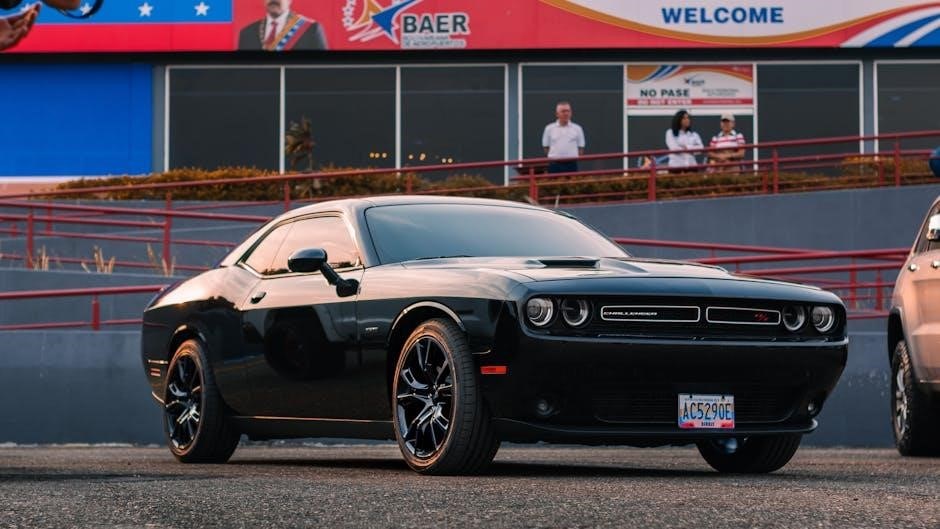
Popular Differential Upgrade Options
Common upgrades for Scat Pack manuals include 4.10, 3.93, and 3.9 ratios, each offering a unique balance of acceleration and highway drivability.
4.10 Differential Ratio: Benefits and Drawbacks
Switching to a 4.10 differential ratio in a Challenger Scat Pack manual transmission significantly alters the vehicle’s performance profile. The primary benefit is dramatically improved acceleration, particularly from a standstill and in lower gears, making it ideal for drag racing or spirited driving. This steeper ratio allows the engine to operate within its power band more effectively during acceleration.
However, this comes with drawbacks. A 4.10 ratio increases engine RPM at highway speeds, potentially reducing fuel economy. Drivers may experience a higher engine drone during cruising, and the increased rotational speed can lead to slightly reduced top speed. Careful consideration of driving habits is crucial; it’s best suited for those prioritizing performance over extended highway comfort.
3.93 Differential Ratio: A Balanced Approach
The 3.93 differential ratio presents a compelling compromise for Challenger Scat Pack manual owners seeking enhanced performance without sacrificing everyday drivability. Many enthusiasts consider it a sweet spot, offering noticeable improvements in acceleration compared to the stock ratio, while minimizing the negative impacts on highway fuel economy and cruising comfort.
Reddit discussions highlight the 3.93 as a popular choice, particularly for those who frequently drive both city streets and highways. It provides a tangible boost in responsiveness without pushing engine RPMs excessively high at higher speeds. This balance makes it a versatile upgrade suitable for a wider range of driving conditions, offering a noticeable improvement without significant compromise.
3.9 Differential Ratio: City Driving Optimization
For Challenger Scat Pack manual drivers prioritizing urban performance, the 3.9 differential ratio emerges as a particularly effective choice. This gear ratio is specifically lauded for its ability to significantly enhance acceleration and responsiveness in stop-and-go city traffic, providing quicker off-the-line bursts and improved maneuverability.
However, it’s crucial to acknowledge the trade-offs. As noted in online forums, a 3.9 ratio can lead to reduced fuel efficiency during highway driving. The increased engine RPMs required to maintain speed on the open road translate to lower MPG. Despite this, the substantial gains in city drivability make it an ideal option for those whose primary driving occurs within urban environments.
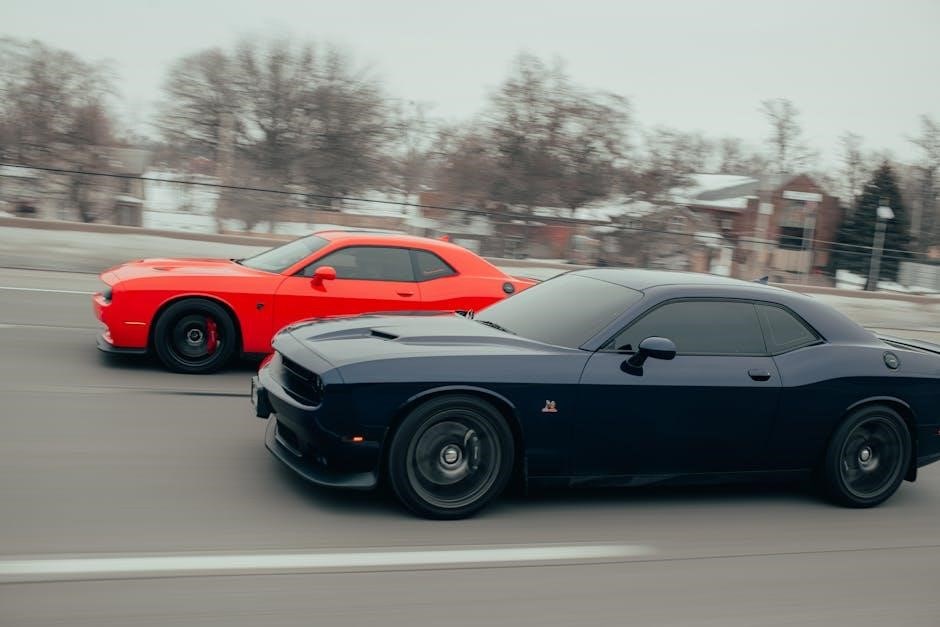
Impact of Differential Changes
Altering the differential ratio in a Challenger Scat Pack manual dramatically affects highway MPG, acceleration, and track performance, requiring careful consideration of driving needs.
Highway MPG with Different Ratios (Manual Transmission)
Achieving optimal highway MPG with a Challenger Scat Pack manual transmission hinges on selecting the appropriate differential ratio. Stock ratios balance performance and efficiency, but modifications significantly impact fuel economy. A shift towards numerically higher ratios, such as 4.10, generally decreases highway MPG due to increased engine RPM at cruising speeds;
Conversely, ratios like 3.9 or 3.93 can offer a compromise, potentially maintaining acceptable acceleration while slightly improving MPG compared to the 4.10. Reddit discussions indicate a 3.93 ratio can achieve around 26 MPG on a long highway trip with a manual transmission, but this varies based on driving style and conditions. Lower ratios reduce engine strain at highway speeds, contributing to better fuel efficiency, but may sacrifice some responsiveness.
Acceleration Performance with Modified Differentials
Modifying the differential ratio in a Challenger Scat Pack manual dramatically alters acceleration performance. A numerically higher ratio, like 4.10, provides quicker acceleration, particularly from a standstill, by increasing torque multiplication. This is beneficial for drag racing and spirited driving, but can lead to higher engine RPMs at lower speeds.
A 3.93 ratio strikes a balance, offering noticeable improvement over stock without sacrificing too much highway drivability. The 3.9 ratio is often favored for city driving, prioritizing responsiveness in lower gears. However, it may not deliver the same explosive acceleration as the 4.10. The 8-speed TorqueFlite transmission’s low first and second gears also influence how these changes are felt.
Track Performance: Optimizing for Drag Racing
For optimal drag racing performance in a Challenger Scat Pack manual, a 4.10 differential ratio is frequently chosen. This higher gear ratio maximizes acceleration, allowing for quicker launches and improved 60-foot times. The increased torque multiplication helps overcome initial inertia, crucial in a drag race scenario. However, careful consideration of tire size and overall gearing is essential to avoid exceeding the engine’s optimal RPM range.
While a 3.93 ratio offers a compromise, the 4.10 generally provides a more significant advantage on the track. Remember that the 8-speed transmission’s gear ratios also play a role, and proper tuning is vital to harness the full potential of the modified differential.
Installation and Considerations
Differential swaps require expertise; professional installation is recommended. Costs vary, encompassing parts and labor. Post-change, monitor for unusual noises or vibrations, ensuring proper function.
Professional Installation vs. DIY
Professional installation of a differential offers peace of mind and guarantees proper setup. Experienced mechanics possess the necessary tools, knowledge of torque specifications, and expertise to avoid costly errors. They can also verify compatibility and address any unforeseen issues during the process. This route typically includes a warranty on both parts and labor, protecting your investment.
DIY installation is possible for skilled enthusiasts with the appropriate tools and a comprehensive understanding of automotive mechanics. However, it demands meticulous attention to detail, including precise backlash adjustment and proper fluid filling. Incorrect installation can lead to premature wear, noise, or even catastrophic failure. Thorough research, detailed instructions, and a willingness to seek guidance are crucial for a successful DIY differential swap.
Ultimately, the choice depends on your mechanical aptitude, available resources, and comfort level.
Cost of Differential Replacement/Upgrade
Differential replacement or upgrade costs vary significantly based on several factors. A used differential assembly can range from $500 to $1500 on platforms like eBay, depending on condition and gear ratio. New differential assemblies, particularly those with desirable ratios like 4.10 or 3.93, typically cost between $1800 and $3000.
Installation labor adds a substantial expense. Professional installation generally ranges from $800 to $1500, depending on the shop’s hourly rate and the complexity of the job. Additional costs may include fluids, seals, and potentially, a driveshaft modification if required for compatibility.
Total costs, therefore, can range from approximately $1300 (used diff + DIY install) to over $4500 (new diff + professional install). Careful budgeting and research are essential.
Potential Issues After Differential Change
Post-differential change issues can arise if the installation isn’t precise or if components aren’t properly matched. Common problems include excessive gear noise, vibrations, or fluid leaks. Incorrect pinion depth or backlash adjustment can lead to premature wear and failure of the gears.
Speedometer inaccuracies are possible, especially with significant ratio changes, requiring recalibration. Furthermore, altering the differential ratio can affect the TorqueFlite ZF 8HP70 transmission’s performance, potentially causing harsh shifting or reduced efficiency.
Driveshaft compatibility must be verified; modifications may be needed. Thorough break-in procedures and regular fluid checks are crucial to mitigate these risks and ensure longevity.
Compatibility and Parts
Finding the correct differential requires verifying compatibility with your Scat Pack’s transmission and year. eBay offers a wide selection of rear differential assemblies for Challengers.
Finding the Right Differential for Your Scat Pack
Selecting the ideal differential for your Challenger Scat Pack manual requires careful consideration of your driving style and goals. Stock ratios vary by year, but popular upgrades include 3.93, 4.10, and 3.9. A 3.93 ratio offers a balanced approach, providing improved acceleration without significantly sacrificing highway MPG, as noted by Reddit users.
For primarily city driving, a 3.9 ratio is often recommended, though it may compromise fuel economy on longer trips. If maximizing acceleration and drag strip performance is the priority, a 4.10 ratio is a common choice.
Ensure the chosen differential is compatible with your specific transmission type – manual in this case – and model year. Resources like Dodge Challenger forums and eBay can aid in locating suitable parts and verifying fitment.
Rear Differential Assemblies Available on eBay
eBay presents a diverse marketplace for Dodge Challenger rear differential assemblies, offering both stock replacements and performance upgrades. Listings frequently include options suitable for Scat Pack models, with varying gear ratios like 3.93 and 4.10 readily available.
When searching, utilize filters to specify compatibility with your Challenger’s model year and transmission type (manual). Pay close attention to the seller’s description, verifying the differential’s condition and any included components.
“eBay Guaranteed Fit” ensures the part is compatible with your vehicle. Consider the potential cost savings of purchasing a used assembly versus a new one, but factor in potential wear and tear. Thorough research and comparing listings are crucial for securing the right differential.
Ensuring Compatibility with Transmission Type
Differential compatibility is paramount when upgrading or replacing the rear end in a Challenger Scat Pack manual. The transmission significantly influences the optimal gear ratio selection. The TorqueFlite ZF 8HP70 8-speed automatic and the manual transmission require different considerations.
Manual transmission Challengers often benefit from numerically higher ratios (like 4.10) to enhance acceleration, compensating for the lack of automatic torque multiplication. However, a lower first and second gear in the 8-speed automatic means a more conservative ratio might be preferable to avoid excessively high RPMs at highway speeds.
Carefully assess your driving style and intended use before choosing a ratio, ensuring it complements your transmission for optimal performance and drivability.

Advanced Topics
Exploring the interplay between the differential, transmission (like the ZF 8HP70), pinion/ring gear dynamics, and limited-slip differentials unlocks peak Scat Pack performance.
TorqueFlite ZF 8HP70 Transmission and Differential Interaction
The eight-speed TorqueFlite ZF 8HP70 transmission, prevalent in many Challenger models, significantly influences how a differential ratio impacts overall driving experience. Notably, the transmission boasts a relatively low first and second gear. This characteristic means that when opting for a lower (numerically higher) differential ratio – such as a 4.10 – drivers may encounter higher RPMs at typical highway speeds.
Understanding this interaction is crucial. A lower gear ratio amplifies engine torque, enhancing acceleration, but can compromise fuel efficiency during cruising. Conversely, a taller (numerically lower) ratio prioritizes highway MPG but may feel less responsive. Careful consideration of the transmission’s gearing is paramount when selecting the optimal differential ratio for a Scat Pack.
Understanding Pinion and Ring Gear Relationship
The differential’s core lies in the interplay between the pinion and ring gear. The pinion, driven by the driveshaft, meshes with the ring gear, transferring rotational force to the axles. The ratio between these gears dictates the final drive ratio – essentially, how many times the engine’s output shaft must rotate to turn the wheels once.
A 3.93 ratio, for example, means the engine spins 3.93 times for each wheel revolution. Changing this ratio alters torque multiplication. Lower ratios (like 4.10) provide more torque but reduce top speed, while higher ratios (like 3.55) offer less torque but improve highway efficiency. Understanding this fundamental relationship is key to selecting the right differential for your Scat Pack’s intended use.
The Role of Limited-Slip Differentials (LSD)
While gear ratio dictates how much torque is sent to the wheels, a Limited-Slip Differential (LSD) controls how that torque is distributed. Standard, or “open,” differentials allow wheels to spin independently, potentially losing traction if one wheel encounters less resistance. An LSD mitigates this by transferring some power to the wheel with more grip.
For a Scat Pack, especially one modified with a different gear ratio, an LSD is highly beneficial. It enhances acceleration, particularly from a standstill, and improves handling by maintaining power to both rear wheels during cornering. This is crucial for maximizing performance, whether on the street or at the drag strip, complementing the chosen gear ratio effectively;

Resources and Further Research
Explore Dodge Challenger forums and Reddit’s r/Challenger for owner experiences. Consult automotive specialists and review published articles for in-depth analysis and guidance.
Dodge Challenger Forums and Online Communities
Dodge Challenger forums represent a valuable resource for owners seeking information about differential ratios and upgrades. Platforms like Dodge Challenger Forum host extensive discussions where members share their experiences with various gear ratios, including the popular 3.93 and 4.10 options.
Reddit’s r/Challenger community also provides a space for enthusiasts to exchange insights. Users frequently discuss the pros and cons of different ratios, detailing their impact on highway MPG and acceleration. Many share personal experiences, like achieving 26 MPG on a 1600-mile trip with a 3.93 ratio, or recommending 3.9 for optimal city driving.
These online communities offer real-world feedback, helping potential modifiers make informed decisions based on the collective knowledge of fellow Challenger owners. They are excellent places to ask specific questions and receive tailored advice.
Professional Automotive Mechanics and Specialists
Consulting with professional automotive mechanics is crucial when considering a differential change for your Challenger Scat Pack manual. Experienced specialists can accurately assess your vehicle’s needs and recommend the optimal gear ratio based on your driving style and goals.
They possess the expertise to properly install the differential, ensuring correct pinion depth and backlash for optimal performance and longevity. Given the potential for high RPMs with lower gear ratios, particularly in the first and second gears of the TorqueFlite ZF 8HP70 transmission, professional guidance is invaluable.
A skilled mechanic can also advise on potential issues post-change and ensure compatibility with your transmission type, preventing costly errors and maximizing the benefits of your upgrade.
Published Articles and Automotive Reviews
Exploring published articles and automotive reviews provides valuable insights into Challenger Scat Pack differential modifications. Numerous online forums, like those on Reddit (r/Challenger), detail real-world experiences with different gear ratios, such as the popular 3.93 and 4.10 options.
These resources often discuss the trade-offs between acceleration, highway MPG, and city driving optimization; Reviews highlight how a 3.9 ratio can be ideal for urban environments, despite potentially reduced fuel efficiency on the highway.
Furthermore, articles often cover the impact of lower gear ratios on RPMs, especially considering the 8-speed automatic’s low first and second gears, and the importance of professional installation for optimal results.